
Heightened geopolitical tensions, such as conflicts between countries, wars or global political instability, often trigger turmoil in financial markets. In such situations, investors are faced with uncertainties that can affect asset prices, capital flows, and overall economic stability. Therefore, it is important to understand safer investment strategies to maintain portfolio value.
This article will discuss various approaches that can help investors stay afloat and manage risk more effectively amidst a heated geopolitical environment.
Article Summary
📊 According to the survey, 34% of respondents cited geopolitical risk as the biggest investment concern in 2024.
📉 Stock prices have the potential to weaken as investors’ strategies change in the face of global uncertainty.
As geopolitical conflicts heat up, UBS projects that gold prices could rise to $6,200 per ounce by the end of June 2026.
🔒 Gold, silver, short-term government bonds, cash, certain currencies, and defensive stocks are some examples of assets that are often considered safe havens.
What is Geopolitical Risk in Investing?
Geopolitical risk in investing is the potential disruption to asset value or portfolio performance due to global political events and conflicts, such as war, terrorism, economic sanctions, and tensions between countries. This risk not only affects investments in foreign markets, but can also impact domestic portfolios as global geopolitical conditions often affect economies, market sentiment, commodity prices and capital flows.
More broadly, geopolitical risk can be understood as the threat, actual occurrence or escalation of events that disrupt international relations. Both threats and actual events can influence investor decisions, trigger market volatility and alter the course of the global economic and financial cycle.
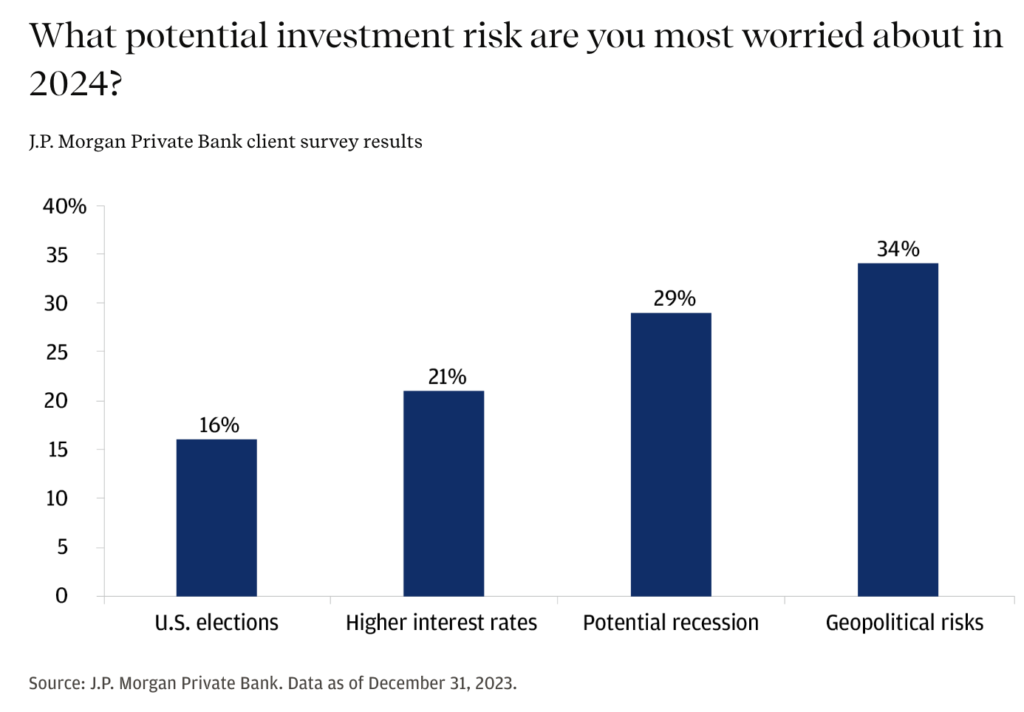
In fact, geopolitical risk has been one of the main concerns of global investors in recent times. According to a J.P. Morgan Private Bank client survey, around 34% of respondents cited geopolitical risk as their biggest investment concern in 2024. This figure is higher than concerns about a potential recession (29%), rising interest rates (21%), or political dynamics such as elections in the United States (16%).
The data shows that investors are increasingly aware of the impact of geopolitical events on financial markets. Tensions between countries, armed conflicts, and global political policies can create uncertainty that affects asset prices, capital flows, and broad economic stability.
The Impact of Geopolitical Conflicts on the Stock Market
Geopolitical conflicts such as wars, diplomatic tensions or acts of terrorism can generally put immense pressure on stock markets. These situations often disrupt trade and investment between countries, depress asset prices and affect the performance of financial institutions.
At the same time, lending to the private sector may also slow down, leading to disrupted economic activity. As stock markets are highly sensitive to global uncertainty, geopolitical conflicts often trigger higher volatility and increase risks to financial stability. Here are some other impacts of geopolitical conflicts:
High Market Volatility
Geopolitical events have a huge influence on the stock market, especially as they can trigger high volatility. When political threats or conflicts arise, investors usually react quickly to the uncertainty. This reaction is often seen in increased transaction volumes and sharper stock price movements. Fears of instability, economic sanctions, or armed conflict can depress stock prices in both domestic and international markets.
Energy Sector Stocks Tend to be More Sensitive
The impact of geopolitical events is not always felt equally across all sectors. Some industries tend to be more sensitive, such as energy, defense and technology. For example, energy sector stocks are usually heavily affected by tensions in oil-producing regions, while defense stocks may rise when government spending on security increases. Meanwhile, the technology sector can also be affected if geopolitical conflicts relate to restrictions on trade, exports or access to critical components.
Changes in Global Capital Flows
Geopolitical risks can also alter capital flows in global financial markets. In situations of uncertainty, investors often move their funds from emerging markets to developed markets that are considered more stable and safe. This movement can cause pressure on stock markets in countries or regions that are considered more vulnerable to geopolitical turmoil.
Shift to Safe Haven Assets
As geopolitical tensions rise, investors usually start shifting funds to assets that tend to be safe during times of global uncertainty, such as gold and government bonds. These instruments are generally chosen to hedge assets when markets are volatile. Such shifting of funds to safe haven assets can put pressure on the stock market as investors’ interest in risky assets declines. As a result, stock prices could potentially weaken as investors change their strategies to deal with global uncertainty.
Stock, Bond, & Commodity Price Movements as Geopolitical Conflicts Heat Up
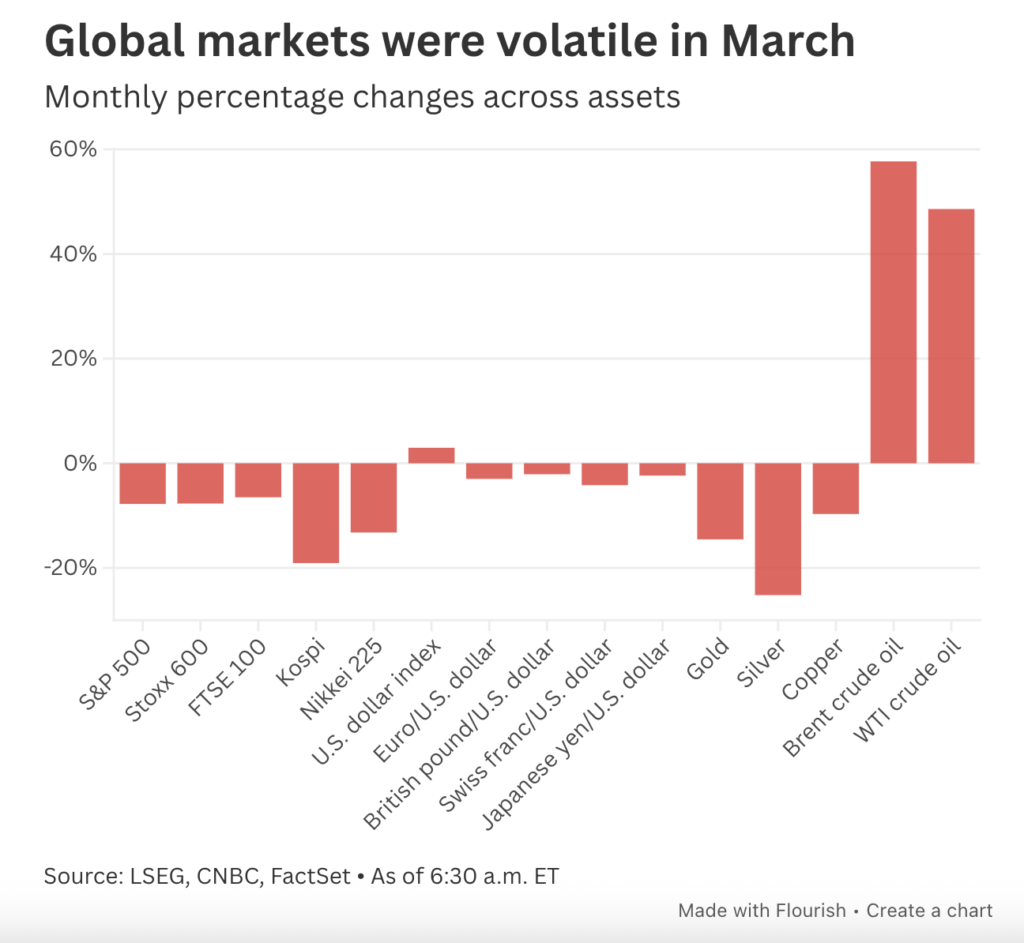
Over the past month, stock, bond, currency and commodity markets experienced high volatility. Many assets moved sharply and recorded heavy losses as the war between the United States and Iran continued. While there were some assets that moved away from the main trend, in general, the negative market sentiment suppressed the prices of various assets throughout the month.
Shares
Reporting from CNBC, global stock markets have experienced major selling pressure during the 5-week war between the United States and Iran. On Wall Street, the three major indices are all on track for a monthly close in the negative zone. However, this pressure did not only affect the US stock market. A number of international markets have also taken a deeper hit, with even the outperformance that some global indices had achieved last year now being erased.
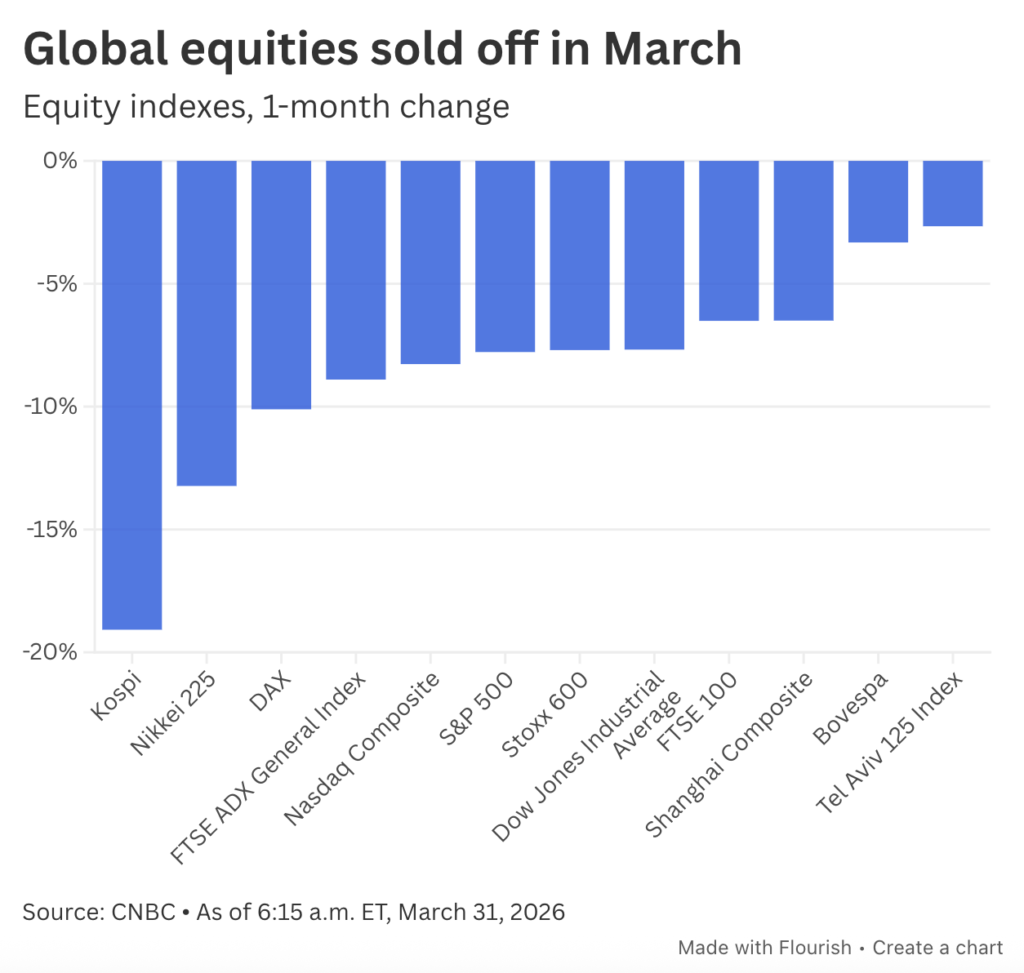
Concerns over the impact of the Iran war on energy prices and inflation have also depressed sentiment in European and Asian markets. These regions are considered to be more dependent on oil and gas imports than the United States, making them more vulnerable to energy shocks. South Korea, for example, recorded a nearly 20% drop in the Kospi index in March, despite being one of the best performing stock markets in 2025. This decline occurred because the country’s economy is highly sensitive to spikes in energy prices.
In a note released on March 30, 2026, Goldman Sachs analysts said that the balance of risks for the stock market has deteriorated and the possibility of stagflation is now increasing. They also considered that stagflation has historically not been a good environment for the stock market. This situation is usually characterized by low real returns and high volatility.
According to them, the market has not yet fully priced in the risk of stagflation. If that scenario does occur, the stock market could still potentially experience further declines with real yields remaining weak.
Bonds
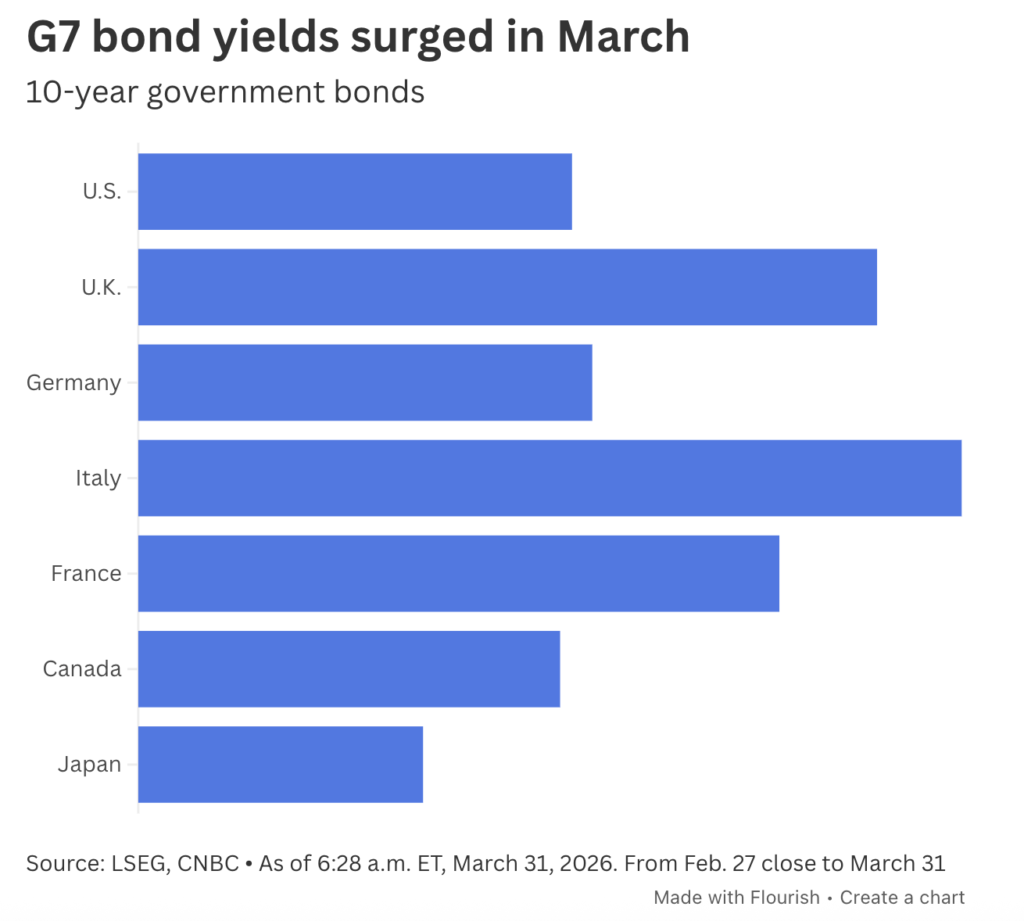
Outside of the stock market, government borrowing costs have also risen amid a large sell-off in sovereign bonds in developed markets. Bond yields, which move in the opposite direction to bond prices, continued to rise throughout March. This rise occurred as investors began to readjust their expectations of possible interest rate hikes by central banks.
Expectations of interest rate cuts from central banks such as the Federal Reserve and the Bank of England declined. In many cases, these expectations even turned into forecasts that monetary policy would remain tight, so yields on European bonds rose to their highest levels in decades.
Investment strategists from Amundi also noted that breakeven curves in the United States and Europe jumped as markets began to revise up inflation expectations while lowering the chances of interest rate cuts by central banks. Nominal yields, especially on short-dated bonds, also rose sharply in some countries such as the UK.
Metal
As geopolitical conflicts have recently heated up, metals markets have seen considerable volatility. Gold, which has been known as a safe haven asset and usually benefits when market conditions are uncertain, has also been affected by selling pressure. In fact, gold is heading towards its worst monthly performance since 2008.
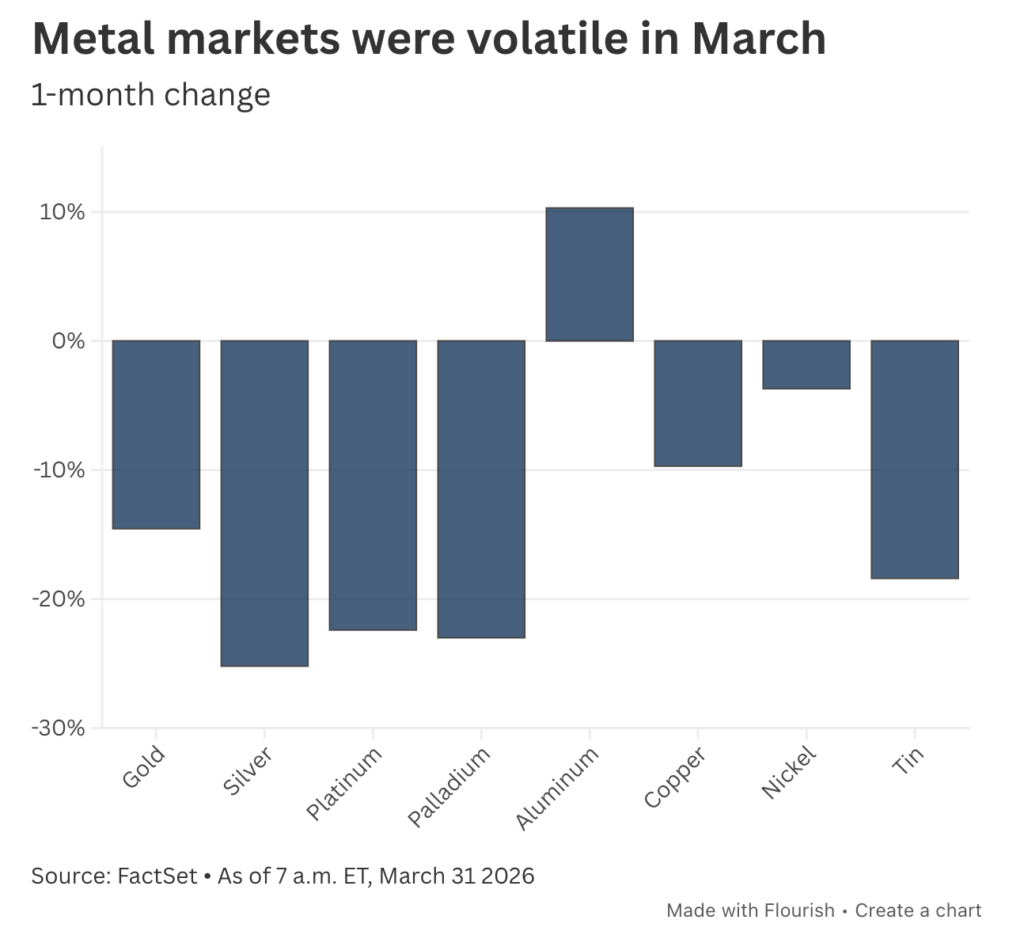
Quoting the CNBC report, the strengthening of the US dollar and the increasing likelihood of higher interest rates are the main factors suppressing gold prices. Even so, many market participants still maintain a positive view of the prospects for this precious metal.
Mark Haefele, Chief Investment Officer of UBS Global Wealth Management, in a note on March 30, 2026, said that the decline in gold prices is likely to be temporary. According to him, although it is difficult to determine the exact time, gold is expected to strengthen again.
UBS projects that gold prices could rise to $6,200 per ounce by the end of June 2026, then drop slightly to around $5,900 per ounce by early 2027, from its current position of around $4,500 per ounce.
Meanwhile, aluminum prices also moved volatile. Iran’s attacks on metal producers in the Gulf region sparked fears of disruption to global supply. On the other hand, the copper market was more affected by pessimism about economic conditions, which also put pressure on its price movements.
Energy
The energy market is the main center of global market anxiety today. The Iran war, plus the blocking of the Strait of Hormuz, a crucial oil shipping route, has seriously disrupted the oil and gas market. As a result, energy prices have risen sharply in a short period of time.
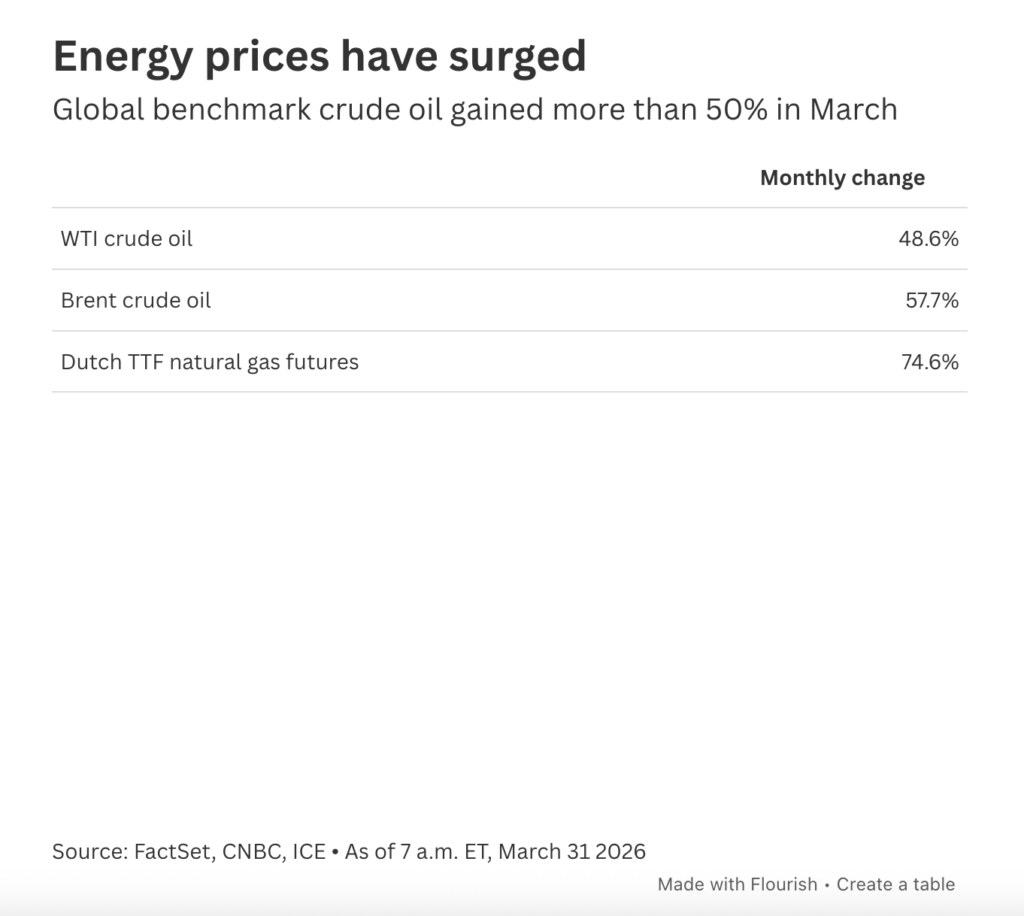
Data from Europe on March 31, 2026 showed that inflation in the eurozone rose to 2.5% in March, surpassing the 2% target set by the European Central Bank. Officials also estimated that energy inflation reached 4.9% in March, reversing up from a contraction of 3.1% in the previous month.
According to AJ Bell’s Dan Coatsworth, the rapid spike in oil prices poses a major risk to consumers as it could push up the cost of living sharply. This could potentially lead people to reduce consumption or become more selective in spending until they understand whether the price hikes are temporary or will persist in the long run.
How to Protect Portfolio from Market Volatility?
Quoting a CNBC report, Dan Coatsworth, Head of Markets at AJ Bell, shared three key pieces of advice for investors when facing a down market, namely;
- Diversify;
- Stick to the investment plan;
- And not too frequent transactions.
He explains that frequent buying and selling can add costs and ultimately reduce investment returns. According to him, since the war started, the market has moved very wildly and this volatility has encouraged some investors to speculate on the direction of a particular stock or mutual fund. In fact, market direction can change very quickly and repeatedly, leaving many investors at risk of disappointment. Under these conditions, a more calm and long-term oriented approach is considered wiser than continuing to go in and out of the market in a matter of hours or days.
Meanwhile, VanEck shared some strategies to make investors’ portfolios more resilient to market turmoil caused by geopolitical conflicts, such as:
Does not rely on traditional 60/40 allocation
Investors may consider diversification that goes beyond the classic 60% stocks and 40% bonds pattern. Real assets such as gold and other commodities are often able to maintain their value, and potentially even increase, when global conditions are unstable.
Using relatively safe investment instruments during the war
Gold is widely recognized as a relatively safe investment instrument in times of war as it serves as a store of value and tends to be sought after when global uncertainty increases. When geopolitical risks heat up, gold is often used as a hedge asset to keep portfolios stable. On the other hand, Bitcoin (BTC), despite its higher volatility, is starting to be viewed by some investors as an alternative store of value asset amid market turmoil.
Geographic diversification
Spreading investments across different countries and regions can help reduce the risk of being overly concentrated in one particular region. With this approach, the impact of a single geopolitical event in a country does not immediately shake the entire portfolio significantly.
Seeing potential in the global market
Global diversification is becoming increasingly important, especially when certain markets start to show strong structural growth potential. In this context, a number of investors see markets such as India as an attractive region on the back of long-term economic growth prospects and relatively favorable macro factors.
Not only dependent on US stocks
In recent times, US stocks, especially large-cap tech stocks, have been the main drivers of market performance. However, this may not necessarily continue. If we look at the principle of mean reversion, overly dominant performance in one market or sector usually does not last forever. Therefore, global diversification remains an important step to maintain a balanced portfolio.
What is Safe Haven in Investing?
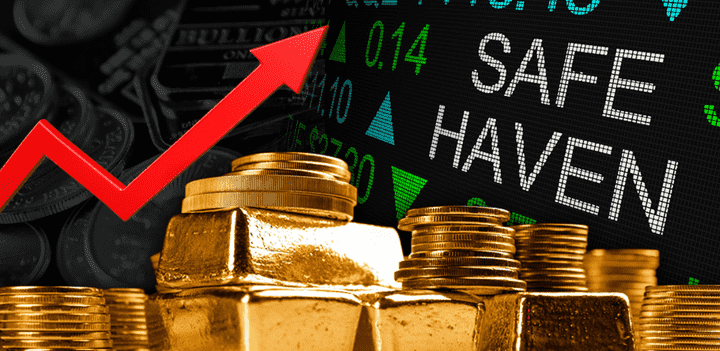
In general, safe havens are investment assets that are considered more stable when markets are volatile. These assets tend to be able to maintain their value, or even strengthen, when economic and political conditions are uncertain. Although they still carry risks, safe havens are generally considered more resilient to pressure than riskier assets during times of crisis.
There are several characteristics that make an asset considered a safe haven, namely:
- First, the asset has high liquidity, making it easy to buy or sell when investors need funds.
- Secondly, the asset usually has an element of scarcity, as limited supply tends to help maintain its value.
- Third, safe haven assets generally have lower volatility and do not always move in the same direction as riskier assets such as stocks, so they can help balance a portfolio during market downturns.
Examples of Safe Haven Assets
Gold and silver
Gold is often considered a safe haven asset as its value tends to remain strong, and even increase, during times of market uncertainty. It is also often used as a hedge against inflation as it has a limited supply, unlike fiat currencies which can be increased through monetary policy.
Silver can also be an attractive investment option, but it has a slightly different character than gold. Besides being seen as a hedging asset, silver has considerable industrial demand, including for electronics and electric vehicles.
In the most recent period, gold and silver prices hit record highs amid rising trade tensions and investors’ search for safe assets. Although prices later corrected, JPMorgan still expects the outlook for gold to remain strong, with a target range of around $6,000-$6,300 per ounce by 2026 due to demand from central banks and investors.
Treasury Bills
Treasury bills, or T-bills, are short-term U.S. government debt securities, usually with a tenor of up to 52 weeks. They are often chosen by investors who are looking for a relatively safe place to keep their funds for a short period of time. In some circumstances, the yield on T-bills can also be more attractive than interest on high-interest savings accounts. In addition to their high level of safety, one of the advantages of T-bills is that the interest income is not subject to state or local taxes in the US, making them attractive to investors in areas with high tax burdens.
Cash
Cash is generally considered to be one of the safe haven assets as it provides stability when markets are volatile. When stocks or other risky assets experience sharp declines, cash tends to retain its face value. Therefore, many investors choose to hold cash to protect their funds from market fluctuations in the short term.
However, keeping funds in cash also has its drawbacks. Cash does not generate returns like other investment instruments, so there is an opportunity cost or potential profit lost when funds are only stored and not invested.
Currency
Some currencies such as the Swiss franc, Japanese yen and the US dollar are often considered safe haven currencies because they tend to maintain or even increase in value when global conditions are unstable. These currencies usually come from countries with stable political conditions, strong financial systems, and high levels of liquidity, so they remain attractive to investors amid market uncertainty.
Defensive Stocks
Defensive stocks are stocks of companies whose businesses tend to stay afloat, even when the economy is slowing down. These companies are generally in sectors where people continue to need their products, such as basic necessities, healthcare, household goods, utilities, and other essentials. Since demand for these products and services is relatively stable, defensive stocks are usually more resilient to market turmoil than stocks from sectors that are more sensitive to economic conditions.
Is Gold Investment Suitable for Conflict Times?
After getting to know various safe haven assets, the question that then arises is: is gold investment suitable for times of conflict? Before giving the answer, here is some information worth noting.
According to Discovery Alert, for thousands of years, gold has been recognized as one of the most reliable financial instruments in times of conflict. Its function is not only limited to maintaining the value of wealth, but also plays an important role in financing wars, maintaining economic stability, and influencing a country’s geopolitical position in the midst of a war situation.
Throughout history, the intrinsic value of gold has withstood the rise and fall of empires, revolutions, and modern conflicts. The World Gold Council also noted that central banks purchased more than 1,136 tons of gold in 2022 and 1,037 tons in 2023. Meanwhile, preliminary data shows purchases of about 483 tons in the first half of 2024. This pattern of increasing accumulation reflects that many governments are starting to strengthen their gold reserves in anticipation of higher geopolitical risks.
The Relationship between Geopolitical Conflicts and Gold Price Movements
Historical market data shows a fairly consistent pattern, where gold prices tend to rise during major military conflicts.
During World War II (1939-1945), gold was able to maintain its purchasing power when many currencies declined in value due to wartime inflation. Then in the Vietnam War era (1965-1975), the price of gold rose from around $35 to more than $180 per ounce as increased military spending put pressure on the monetary system.
During the Gulf War (1990-1991), gold prices recorded a rise of about 15% in the months surrounding the conflict period. Meanwhile, in the Iraq War (2003), gold rallied about 19% during the year of the invasion. In the Russia-Ukraine conflict (2022), geopolitical tensions also helped push gold prices to new record highs, above $2,450 per ounce.
And most recently, when the US-Israel and Iran conflicts heated up in early 2026, the spot price of gold again set a new record high by breaking the $5,500 per ounce level on January 28, 2026. Previously, gold prices had also crossed the $5,000 per ounce mark in early January. This increase was driven by high demand for safe haven assets, rising geopolitical uncertainty, and expectations that interest rates will begin to be lowered.
While investing in gold at a time of heightened geopolitical conflict may seem to offer great potential, it is important to understand that gold is not a completely risk-free asset. In the short term, its price can still fluctuate due to other factors such as interest rate movements, the value of the US dollar, and global liquidity conditions. Therefore, gold should be used as part of a portfolio diversification strategy, not as a sole investment instrument.
What Should Investors Do Right Now?
Remembering the message of the late President George H. W. Bush, the best thing to do is to stay consistent with your initial strategy and avoid buying or selling decisions that are driven by panic or emotion. Every investment decision should be based on thorough research.
According to research from Vanguard, staying in the market is a proven profitable strategy. For example, if one invested $100,000 in the S&P 500 index in 1988 and left it at that, the fund would have grown to $4.9 million by 2024. Conversely, if one were to exit the market and miss the 10 best-performing trading days alone, one’s gains would plummet by 52% to just $2.3 million.
Unfortunately, panic selling is a fairly common reaction. Abacademies notes that the phenomenon of panic selling is very common due to the effects of loss aversion-a psychological tendency where the pain of a loss feels twice as severe as the satisfaction of an equivalent gain.
In addition, research from William & Mary shows that this panic is often exacerbated byherding behavior. The surprising fact is that only 5% of investors are well-informed, which influences the decisions of the other 95%.
Best Defense Strategy: Diversification
To protect your assets, build a portfolio that is diversified in terms of geographical regions and industry sectors. Here are some approaches recommended by experts:
- Geographic Diversification: UBS Global Wealth calls this strategy the “most preferred basic hedge” for dealing with geopolitical crises. The reason is that a crisis usually hits certain countries much harder than others.
- Asset Class Diversification & Active Risk Management: Morgan Stanley suggests this approach by including high-quality stocks from various crucial sectors, such as financials, healthcare, industrials, and energy.
- Gold Allocation: Investors can also consider allocating up to 15% of their portfolio to gold. Data from LSEG shows that since 2020, a portfolio composition of 60% stocks, 20% bonds and 20% gold has proven to be more resilient amid market volatility, outperforming traditional portfolios of 60% stocks and 40% bonds.
Conclusion
A safe investment strategy when geopolitics heat up essentially focuses on maintaining portfolio stability, rather than pursuing aggressive returns in the short term. The most relevant approach is to diversify across assets, sectors and regions, and place some funds in instruments that tend to be more resilient to volatility, such as gold, short-term government bonds, cash or defensive stocks.
At the same time, investors also need to avoid impulsive decisions due to market panic, as volatility during conflicts is usually high but not necessarily permanent. With a balanced portfolio and a disciplined strategy, investors have a better chance of staying protected amidst global uncertainty.
Portfolio Diversification Through Door App
As technology, particularly blockchain, continues to evolve, opportunities for portfolio diversification are expanding, including in the cryptocurrency space. Investors are no longer limited to traditional assets, but can also access new instruments that represent the value of real-world assets. Innovations such as tokenization allow a wide range of assets-from stocks of US companies such as Nvidia (NVDAX) and Chevron (CVXON), to commodities such as gold (PAXG) and iShares Silver Trust (SLVON)-to be presented in a digital form that is easier to access and trade.
Through platforms like Pintu, investors can capitalize on these developments to build a more diversified portfolio within a single ecosystem. Asset tokenization gives investors the flexibility to gain exposure to multiple asset classes without having to switch platforms or face access barriers as in traditional markets.
Check out the tokenization of assets available in the Pintu app here.
Disclaimer: All articles from Pintu Academy are intended for educational purposes and do not constitute financial advice.
Reference:
- Chloe Taylor. Stocks, bonds and commodities: How global markets have traded the Iran war. Accessed on April 3, 2026
- Dylan Desai. How to Protect Your Portfolio from Geopolitical Shocks. Accessed on April 3, 2026
- Forbes. Feeling Anxious About The Markets? How To Invest Responsibly During Global Uncertainty. Accessed on April 3, 2026
- Investopedia. How Investors Can Adjust to the Geopolitical Risk Sparked by the Iran Conflict-Experts Weigh In. Accessed on April 3, 2026
- Joey Sedl. How do geopolitical shocks impact markets? Accessed on April 3, 2026
- Oleg Ruban. Understanding Geopolitical Risk in Investments. Accessed on April 3, 2026
- Yahoo Finance. What’s a safe haven, and should you invest in one? Accessed on April 3, 2026
